The Force Will Be With You, Always: Love and Loss through STAR WARS

On December 24, 2016, news broke that Carrie Fisher had suffered cardiac arrest on a plane. She was in the hospital. She was stable. She had been through plenty of figurative heartbreak, literal heartbreak was the natural progression. As a fan, an admirer, I knew she would be fine.

About a year earlier, December 28, 2015, I got a text at work that my grandmother had been taken to the hospital. She had been out, buying a birthday gift for me, when she unknowingly suffered cardiac arrest in a restaurant. As a fan, an admirer, I knew she would be fine.

I was wrong on both.

On December 27, while I waited in the lobby at WXXI to discuss the cast of Rogue One and representation of women and minorities in pop culture, I read the news. I had the misfortune of sharing that with the other guests on the show, and with the host. Instead of hearing it on the radio and reacting, privately, I had to react live on air.

It wasn’t fun. I mentioned her approach to meeting the fans she loved, keeping her words during our exchange for myself, her role, not just as Princess Leia, but as a tireless advocate for mental health. What I didn’t mention, because, really, no one wanted to hear it, was that Carrie’s death was another jab in an already-open wound.

I had taken the last few days of 2015 off. I was going to do something. Instead, we planned a funeral, canceled credit cards, and she fed us for the last time from the leftovers of her last family – including friends of several decades – party. The following Monday I went back to work. I cried at my desk, with no prompt. If anyone noticed, they said nothing. I’m still not sure if that made it better or worse.

A year later, I, again, had the last days of the year off. I was doing something, and agreed to talk about Star Wars. Sharing the news with other fans was a burden, but was met with reactions mirroring my own.  Of the five people in the room, I was the only one who had met Carrie Fisher (in August 2013; after signing across her character’s chest she declared “Right on the boobs; that’s what they’re good for”), but anyone who had read her books or seen her in interviews (which were more frequent in the wake of The Force Awakens and her last memoir, The Princess Diarist) was familiar with a sometimes shockingly-candid Carrie.

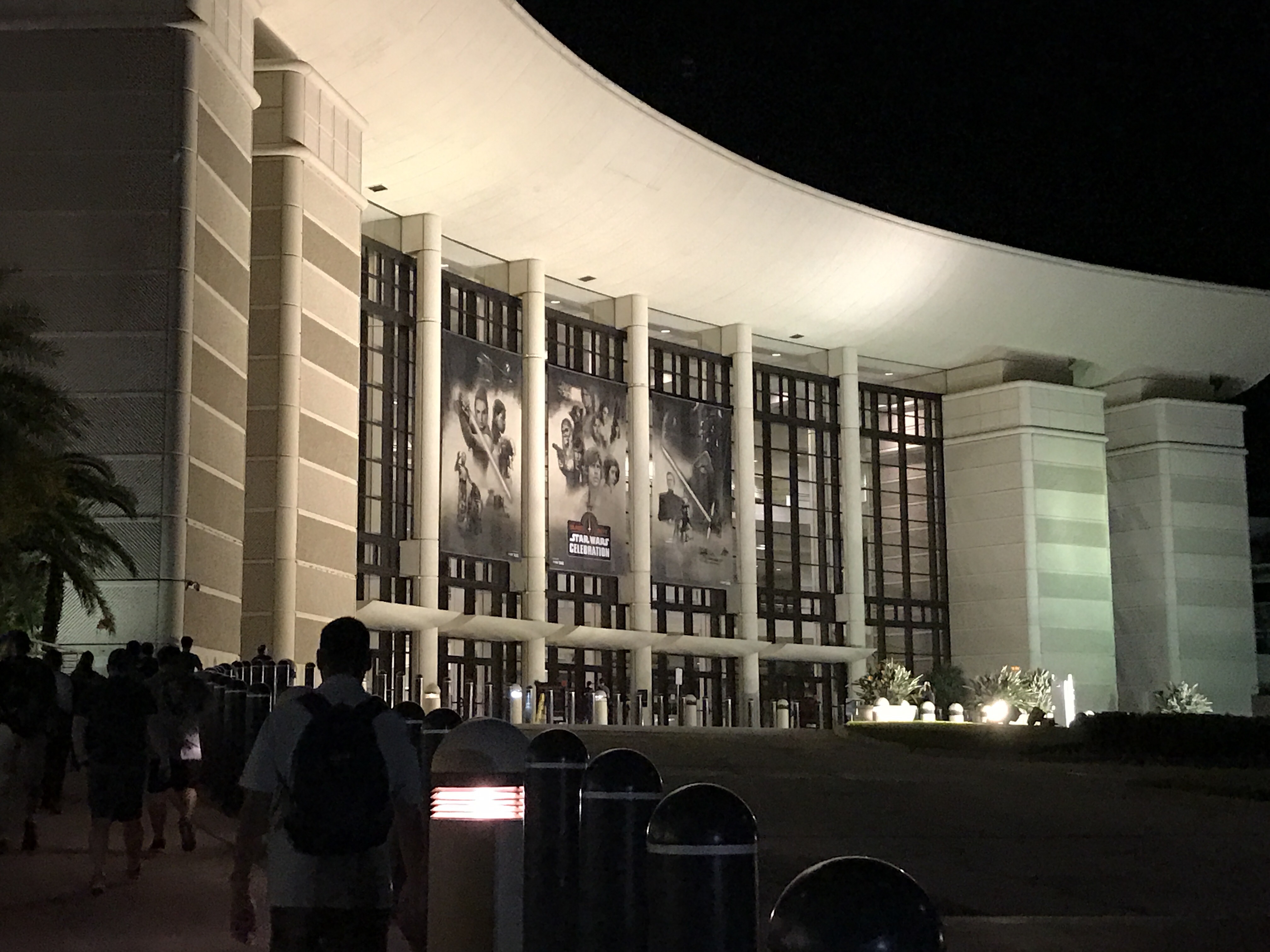
A common criticism of funerals is that a priest or some other stranger tells a few dozen of the departed’s closest friends and family vague, surface-level facts about someone they likely never met. Reverse roles, though, and something special happens, as it did at Star Wars Celebration in April 2017. Four months after Carrie’s death, she was celebrated by her fellow cast members, her daughter, and even John Williams conducting the Orlando Philharmonic Orchestra. Later, her on-screen brother and friend of four decades Mark Hamill led an intimate look at her life with thousands of her biggest fans.

It may seem strange, but I often find myself wondering what Sue Gregory and Carrie Fisher would think about what I’m doing at that moment. By random chance, they have become linked in my memory. It’s good company to keep.
 

Grounded: Twenty years of GARRISON STARR’s Eighteen Over Me

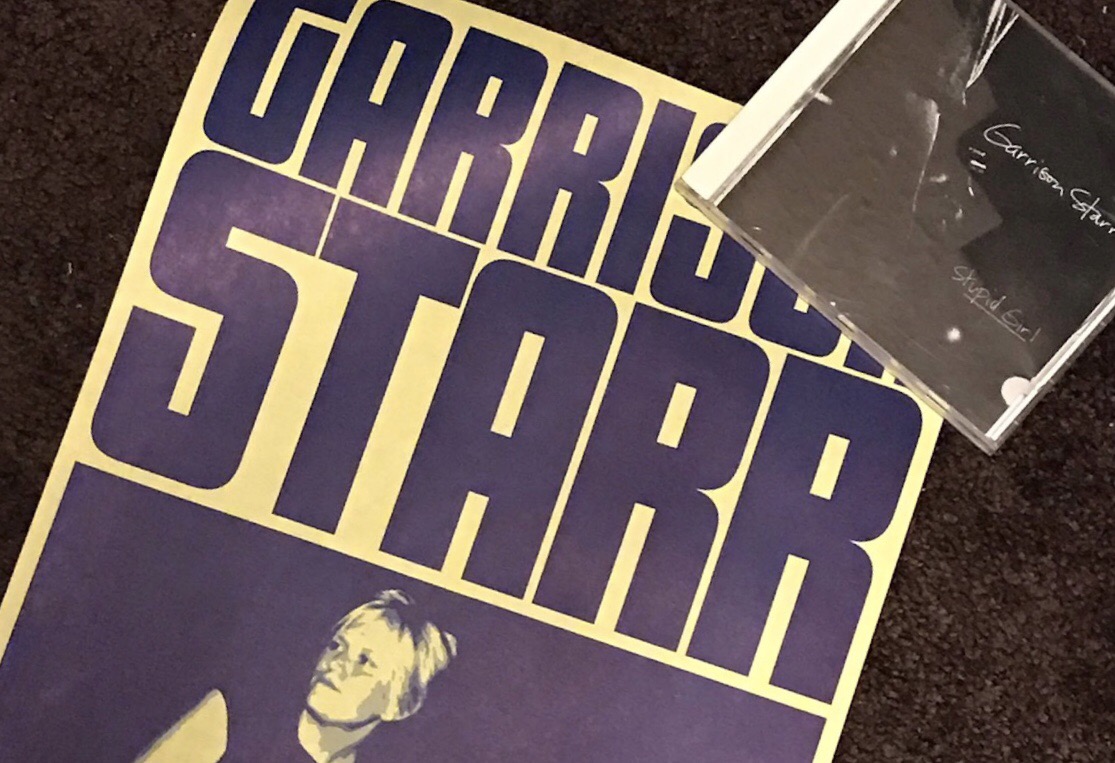
September 23, 1997. Memphis, Tennessee. Garrison Starr is 22 years old, an Ole Miss dropout, and has just released her first major-label album. Starr is a seasoned performer, rising from her childhood bedroom in Hernando, Mississippi to stages all over Memphis. This is her third album. Straight out of high school, she released Pinwheels, an album she later describes as “the multi-platinum cassette tape from 1993.” Her follow-up Stupid Girl, a seven-song EP, attracted the attention of Geffen Records, and led the way to Eighteen Over Me.

Two decades later, let’s take a look at selections from Eighteen Over Me and how they have evolved over time.

Grounded

As a followup to the decidedly folk Stupid Girl, Eighteen Over Me could have been Garrison Starr’s Newport. “Grounded” starts off with a bang – or at least a firm stroke of a snare drum that brings in the electric guitar and bass. Fans and critics made accusations of “selling out” to the Geffen executives. With a gritty, electric layer pulled back, though, Starr’s roots poke through. An acoustic version on 1998’s promo CD 24-7 makes it even more apparent that Garrison Starr was taking a step into the rest of her career.

Superhero

“Superhero” has survived as Eighteen Over Me’s most popular song. Picked up by ABC for its coverage of the 1999 Women’s World Cup, “Superhero” is the plea of a kid – or adult – resisting the requirement to grow up. Issued as a single by Geffen (paired with a radio edit or the album’s title track, depending on which CD single you have a copy of), the song has been released several times since its first appearance. 24-7 includes an alternate edit of the album track as well as an acoustic version. Though recorded with a live band for 2007’s Fans’ Greatest Hits, Volume 1 and live on stage at Washington’s 9:30 Club in 2002*, the definitive version is the slight re-arrangement featured on Airstreams & Satellites from 2004.

(*Garrison Starr Live at the 9:30 Club is erroneously dated November 18, 2000 on CD and digital copies, but was recorded in 2002.)

Passing

With a quiet opening, “Passing” lures the listener into a false sense of security before biting with a sharp electric guitar riff. The lyrics “what can I do for you? / don’t you know who I am? / I am worthy / I am Jesus’ right-hand man” issue a challenge to the song’s subject, though there is a hint of self-reflection. The message is one of found self-worth, but it is up to the listener to decide if the brash electric on Eighteen Over Me or the raw acoustic version on 24-7 better suits the mood.

Ugly

Eighteen Over Me is an album of vulnerabilities, and firmly in the middle, “Ugly” is haunting. It should be no surprise that the song has remained in rotation for two decades with only minor changes. The “clean” version from the album is surpassed by a more raw and exposed solo version recorded for 24-7. A near-identical arrangement appears on Live at Sun Studio with Jay Nash (2010, recorded in 2008), but the most powerful recording closes out 2010’s ReLive, a live album recorded in Nashville with band and strings. In stark contrast to the exposed and alone roots of the song, Starr is joined by a choir of voices as she declares “I’ll be ugly… so you don’t have to be.”

Molly

Two years before Eighteen Over Me, “Molly” first appeared on 1995’s Stupid Girl EP. Here, the tempo increases by half, acoustic guitar gives way to electric crunch, and the sweet southern folk in Starr’s voice takes on a slightly sarcastic tone, “Molly” is two minutes and thirty-two seconds of unanswered questions. The acoustic version from 2004’s Something to Hold You Over EP returns to the original tempo, but nearly a decade after the first recording, a more mature voice suggests that Molly should have known what she was getting herself into.

…a more mature voice suggests that Molly should have known what she was getting herself into.

So what has happened to Garrison Starr since 1997? Aside from the aforementioned Women’s World Cup placement for “Superhero,” her songs have appeared on shows such as The Hills and Pretty Little Liars, and she was invited to write original songs for CMT’s revival of Nashville. She has toured extensively supporting Steve Earle, Mary Chapin Carpenter, and as the headlining act. Five additional albums, four solo EPs, two live albums, and collaborations with artists including Jay Nash, Adrianne Gonzalez, Josh Joplin, and Glen Phillips have garnered Starr a passionate base of fans across North America and Europe.

Starr has participated in Rock ‘n Roll Camp for Girls Los Angeles, performed at Girls Rising BeachFest, and wrote a four-part series for Amy Poehler’s Smart Girls entitled “The Stuff We’re Made Of” detailing her career and the challenges of reconciling the conflicting message of the church she grew up in with the actions of its members while finding her place as a gay woman.

Her latest EP, What If There Is No Destination, was released in June 2017.

www.garrisonstarr.com

The Results Are In: World Video Game Hall of Fame Class of 2017

Spring 2008, Cedar Point. After years of playing imitations, I met the real thing. Photo by Eric Stevens.


2017 has been a dark year, but today, on a cloudy spring day in Rochester, NY, there is a spot of brightness. Donkey Kong has finally been recognized, joining classics from Nintendo and other video game publishers in the World Video Game Hall of Fame at The Strong National Museum of Play.

Donkey Kong, of course, was instrumental in Nintendo’s early success in America when it was released to arcades in 1981. The great ape stood atop the beams of an unfinished building, holding a woman named Pauline captive. Unlike King Kong, the film which would inspire a lawsuit between Universal Pictures and Nintendo, there were no airplanes dispatched to rescue the damsel in distress; there was a carpenter in red, her boyfriend known only as “Jumpman.”

Shigeru Miyamoto, Donkey Kong’s designer and, over thirty years later, a living legend in the industry, had intended Jumpman to star in many of his games. While his name and occupation changed, Jumpman lives on as a plumber named Mario (Super Mario Bros., Mario’s breakout role from 1985, was inducted in 2015). Donkey Kong spawned two sequels, Donkey Kong Junior (which feature Mario as the villain) and Donkey Kong 3, as well as the educational Donkey Kong Junior Math, before taking a leave from the spotlight as Nintendo moved into the home console market.

Donkey Kong and the titular arcade game returned to Nintendo’s Game Boy in 1994, followed by the Donkey Kong Country and Donkey Kong Land series developed for Nintendo by Rare. In the two decades since, Donkey Kong has appeared in many more titles as the hero, a sports icon, and a musician. The Kong family has grown to include dozens of primates of all species.

The 2017 class of the World Video Game Hall of Fame also includes Pokémon Red and Green for Game Boy (the original versions released in Japan in 1996), 1991’s Street Fighter II arcade game, and Halo, released on Xbox in 2001.

The World Video Game Hall of Fame was established in 2015 and is part of the International Center for the History of Electronic Games at The Strong in Rochester, NY.

Star Wars Celebration Orlando: 40 Years of Star Wars


If you asked me how Star Wars Celebration started this morning, you wouldn’t believe my answer.

Trust me.

With some fans waiting in line since yesterday afternoon, expectations were high. With Endor’s own Warwick Davis as host, this celebration of four decades in a galaxy far far away did not disappoint. Joined by Star Wars creator George Lucas, who sold his company and the series that made it to Disney in 2012, Davis guided thousands of fans through the history of the franchise and the many characters that have played a part. Heroes and villains of the series shared their experiences as part of the saga dat he impact it had on their lives, their careers, and the lives of the fans around the world.

Cast members including Hayden Christiansen (Anakin Skywalker), Ian McDiarmid (Emperor Palpatine), Mark Hamill (Luke Skywalker), along with fan favorites Anthony Daniels (C-3PO), Peter Mayhew (Chewbacca), and Billy Dee Williams (Lando Calrissian) paid tribute to Lucas, while Dave Filoni, executive producer of Star Wars Rebels, referenced their own master-apprentice relationship.

Surprise video messages from Liam Neeson and Samuel L. Jackson paled in comparison to an unexpected guest, as Harrison Ford, Han Solo himself, crashed the panel and recounted his chance encounter with Lucas that propelled him to stardom.

A touching tribute to the late Carrie Fisher was capped with remarks from her daughter, Billie Lourde, who, like her mother, recited Princess Leia’s plea for help to Obi-Wan Kenobi. The princess’s theme, along with other selections from the series soundtrack, were performed by the Orlando Philharmonic Orchestra, conducted by composer John Williams.

As unbelievable as it sounds, this was only the first two hours of Star Wars Celebration in Orlando. There is plenty more to come.

Star Wars Celebration runs through Sunday at the Orange County Convention Center in Orlando.

The Strong announces 2017 World Video Game Hall of Fame nominees

Sega’s “Time Traveler” arcade game. Justifiably not in the hall of fame. Photo by Eric Stevens.


In Rochester, NY, where every day is a day for play, today is a little bit bigger. The Strong, home to the National Toy Hall of Fame and International Center for for the History of Electronic Game, among others, announced the third class of nominees to the World Video Game Hall of Fame.
Some titles return from previous nominations, as well as some new additions, though it may be a stretch to call 1981’s Donkey Kong “new”. Nominations were open through February 28.

2017 World Video Game Hall of Fame Nominees:

  • Solitaire – Microsoft Windows
  • Myst – PC
  • Mortal Kombat – arcade
  • Donkey Kong – arcade
  • Halo –Microsoft  Xbox
  • Resident Evil – Sony PlayStation
  • Portal – PC
  • Final Fantasy VII – Sony PlayStation
  • Pokémon Red and Green – Nintendo Game Boy (previously nominated in 2015 and 2016)
  • Street Fighter II – Super NES (previously nominated in 2016)
  • Wii Sports – Nintendo Wii
  • Tomb Raider – PC (previously nominated in 2016)

Six games will be inducted after a public voting period and revealed early this summer. Visitors to the museum can view the current inductees and play a wide range of arcade classics today.

Long Live Rock and Roll: Chuck Berry in Rochester

Berry

Photo by Reed Hoffman, Democrat and Chronicle. Published February 27, 1988.

I know “Sweet Little Sixteen” is about a girl, but that was about the age that music became a major part of my life. Rock and roll was about fifty years old at the time, and I learned it backwards. I traveled through time, learning who influenced my favorite artists, then who influenced those artists, and eventually, it all came back to one man: Chuck Berry. He was never given the royal treatment, but he crafted the crown that Elvis wore. His influence – whether directly, or through the white artists that made his music acceptable – has shaped more than six decades of popular music, from The Beatles and The Rolling Stones to every guitar player, big or small, playing today (or in the past, if they accidentally traveled back to 1955). It’s easy to listen to his many hits today and hear a generic, 1950s rock and roll sound, but those records broke new ground in popular music, pushing lyrics and the electric guitar to new levels.

The package tours that were a staple of early rock and roll brought Berry to the Rochester Community War Memorial on four occasions in the late 1950s, along with Fats Domino, Buddy Holly, The Everly Brothers, and others, including Rochester’s own Jerry Engler. On July 14, 1956, “Rochester teen-agers exploded in appreciative applause” according to the next day’s Democrat and Chronicle. “The two most popular artists, Al Hibler and Chuck Berry, illustrated the catholic taste of the young audience,” wrote Constance Gomberts. “… Chuck Berry inspired rhythmic clapping and squeals of joy with his twangy, pulsating ‘Maybelline’ and ‘Roll Over, Beethoven.'”

Ms. Gomperts was not as enthusiastic just a year later, however. While her July 15, 1956 piece began with the line “Man, it was cool!,” her September 18, 1957 article was titled “Rock ‘n’ Roll Show Solid – Solid Noise, That Is.” Perhaps she deterred Berry from returning to Rochester, for his next performance in the City of Rochester was August 1, 1985, just a year before joining the inaugural class of the Rock and Roll Hall of Fame. The “Rock  Roll’n Remember” package tour also brought Frankie Avalon and Johnny Rivers to the downtown festival site. Three years later, on February 26, 1988, he returned to Rochester, performing two shows at the Renaissance Theatre on Liberty Pole Way.

Like so many acts in the years since then, Rochester was passed over for Syracuse and Buffalo on subsequent tours, though Berry would perform at the Nazareth College Arts Center in 1968, and at SUNY Geneseo in 1995. For the latter half of his career, Berry traveled without a band, picking up a local group to support him at each stop. In 1988, he was supported by a band led by Chet Catallo. Unfortunately, I have failed at finding which local bands backed him in 1985 and 1995. Hopefully, they remember.